Sunday, August 24, 2025

Why Coriolis Flow Meters Are the Gold Standard in Custody Transfer Applications

When it comes to custody transfer applications, accuracy is everything. These are high-stakes transactions where fluids like oil, gas, and chemicals change hands between companies or countries. Even a small measurement error can lead to significant financial losses. That's why industries rely on the most precise and reliable technology available—Coriolis flow meters. They are widely considered the gold standard in custody transfer because they measure mass flow directly, which is the true indicator of fluid quantity .

Unlike other types of flow meters that measure volume, Coriolis meters are unaffected by changes in temperature, pressure, or fluid density. This makes them ideal for applications where conditions fluctuate. For example, a gasoline flow meter must deliver consistent readings whether the fuel is warm or cold. Volume-based meters can drift under such conditions, but Coriolis meters maintain high accuracy because they respond only to mass movement .
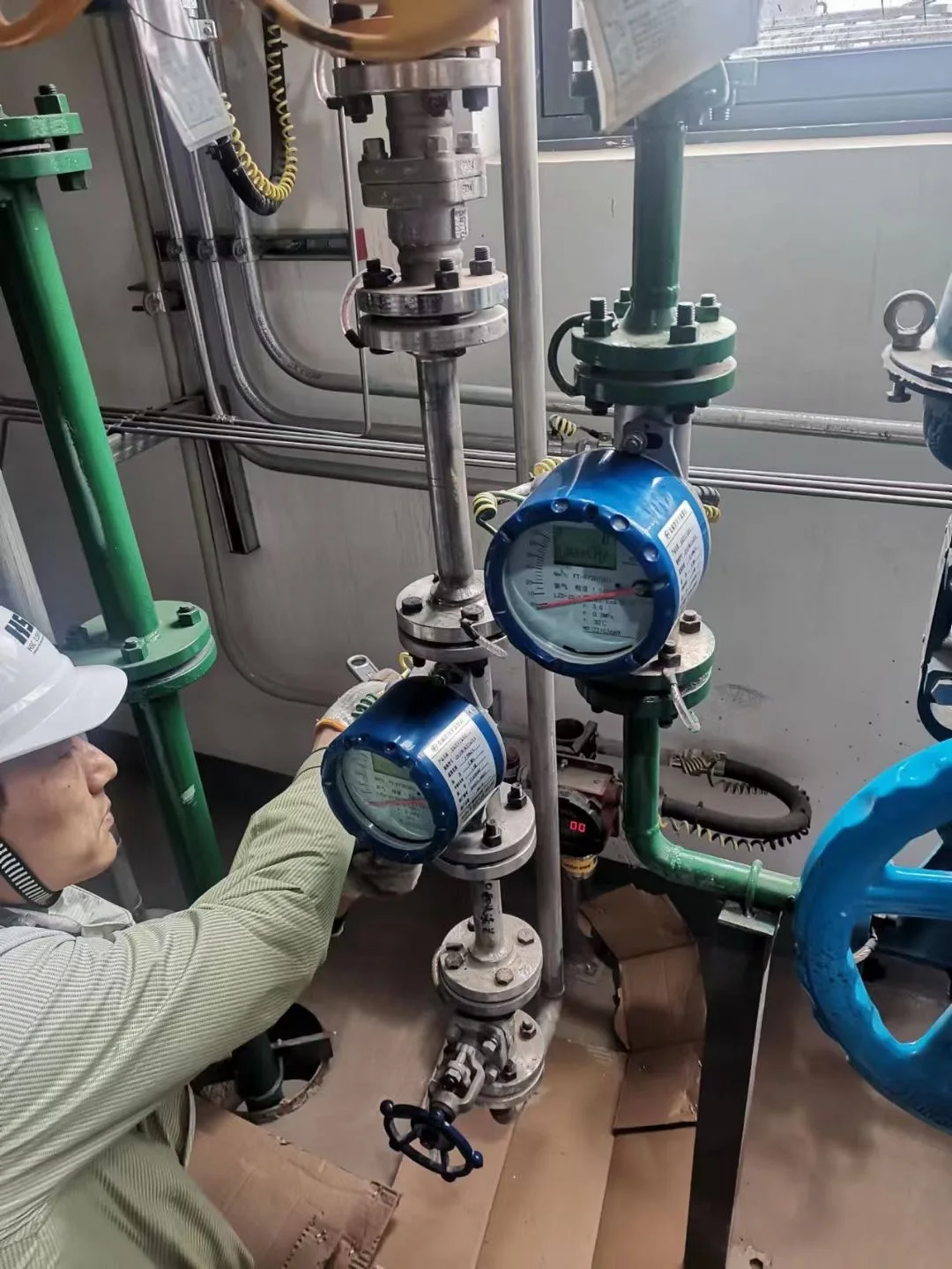
3mm Glass Rotor Flowmeter Gas Flowmeter Float Flowmeter

Coriolis flow meters work by detecting the Coriolis force generated when fluid flows through vibrating tubes. As the fluid moves, it causes a phase shift in the tube's vibration, which is directly proportional to the mass flow rate. This principle allows for extremely accurate measurements—often within ±0.1%—making them suitable for fiscal metering and trade custody transfer .

These meters are also versatile. They can handle a wide range of fluids, including corrosive chemicals, cryogenic liquids, and sanitary applications in the food and beverage industry. Their design is robust, with no moving parts that wear out, leading to low maintenance and long service life. While they may have a higher initial cost—especially for large pipe sizes—their reliability and precision justify the investment .

For applications requiring lower flow rates or more specialized control, alternatives like flow meter controllers can complement Coriolis systems. However, when it comes to final custody transfer, nothing matches the performance of a Coriolis meter. Even traditional options like Débitmètres à déplacement positif (positive displacement meters), while accurate for certain liquids, struggle with varying fluid properties and require more maintenance.

In industries such as petroleum, petrochemicals, and natural gas, mass flow is more important than volume. This is because energy content and pricing are based on mass, not volume. Coriolis meters deliver this critical data with confidence. They are approved for custody transfer by international standards and trusted in pipelines, loading terminals, and marine transfers worldwide .

In summary, Coriolis flow meters stand out due to their direct mass measurement, high accuracy, and reliability. They are not just another option—they are the only technology capable of meeting the strict demands of custody transfer. Whether measuring crude oil, liquefied gas, or specialty chemicals, they ensure fair and transparent transactions across the global energy and chemical sectors .

Friday, August 8, 2025

Mastering Water Flow Meter Challenges in Wastewater Treatment: A 2025 Guide

Water flow meters play a crucial role in modern wastewater treatment plants. They help operators monitor how much water moves through different stages of the system. Accurate flow measurement ensures efficient operations, prevents overflows, and supports regulatory compliance. As we approach 2025, new challenges are emerging — from fluctuating flow rates to harsh environmental conditions. Choosing the right meter is no longer just about accuracy; it's about durability, maintenance, and integration with smart systems .

One common issue in wastewater treatment is the presence of debris and solids in the water stream. These can clog or damage traditional mechanical flow meters. Electromagnetic flow meters have become a popular solution because they have no moving parts and can handle dirty water effectively . Their ability to provide reliable readings even in slurry-like conditions makes them ideal for primary and secondary treatment stages.

However, not all flow measurement challenges involve liquids. In some treatment facilities, biogas is collected and used as an energy source. Monitoring the flow of gases like methane requires a different type of device — such as a thermal mass flow meter. These meters measure gas flow directly based on heat transfer principles, offering high accuracy without the need for pressure or temperature compensation . For hazardous areas where explosive gases may be present, an insertion explosion-proof thermal mass flow meter like the MT211X-Ex is a safe and effective option . You can learn more about this technology here.

Pharmaceutical Hammer Mills Machines Manufacturer

Another challenge in wastewater environments is chemical resistance. Some flow meters degrade when exposed to chlorine, hydrogen sulfide, or other aggressive substances used in treatment processes. Selecting meters made from corrosion-resistant materials like PTFE or stainless steel is essential for long-term reliability . Regular calibration also helps maintain accuracy over time, especially in systems where flow patterns change frequently.

While water is the main focus, some facilities also handle flammable liquids during maintenance or cleaning processes. In such cases, a specialized gasoline flow meter can ensure safe and precise measurement . Though not used in the core treatment process, these meters are vital for fuel management in on-site vehicles or backup generators. Understanding how to measure gasoline accurately and safely is important for overall plant safety . For a complete guide, visit this page.

Looking ahead to 2025, digitalization will continue to shape flow measurement. Smart meters with IoT connectivity allow real-time monitoring and predictive maintenance. This reduces downtime and helps operators respond quickly to anomalies . Integration with SCADA systems enables centralized control across large treatment networks.

Ultimately, mastering flow meter challenges in wastewater treatment means choosing the right tool for each job — whether it's measuring dirty water, biogas, or auxiliary fuels. With the right combination of technology, materials, and data integration, plants can operate more efficiently and sustainably in the years to come .

Saturday, August 2, 2025

Emerging Trends in Gas Flow Measurement: The Synergy of Ultrasonic and Differential Pressure Technologies

In the evolving landscape of industrial flow measurement, accuracy, reliability, and adaptability are more important than ever. As industries from oil and gas to wastewater management demand real-time data and minimal maintenance, traditional flow metering technologies are being re-evaluated and enhanced. Among the most promising developments is the integration of ultrasonic and differential pressure (DP) technologies. This synergy is reshaping how gas flow is measured, offering improved precision and broader applicability across varying flow conditions .

Different applications call for different solutions, which is why understanding the range of available options is crucial. There are several flow meter types, each with its own working principle, strengths, and limitations. For instance, positive displacement meters excel in measuring viscous liquids, while Coriolis meters offer direct mass flow measurement. However, when it comes to gas flow, technologies like DP and ultrasonic meters are often preferred due to their non-intrusive nature and ability to handle high flow rates .

Industrial Control Systems :: Flow monitoring line (Jaba

One of the most established DP-based devices is the pitot tube flow meter. It measures the difference between total pressure and static pressure to determine flow velocity. While simple and cost-effective, traditional pitot tubes can struggle with low flow rates and require precise alignment. They are also sensitive to changes in flow profile, which can compromise accuracy in real-world conditions .

Ultrasonic flow meters, on the other hand, use sound waves to measure flow velocity without any moving parts. They offer high accuracy, especially in large-diameter pipes, and are unaffected by changes in temperature or pressure when properly calibrated. By combining ultrasonic technology with differential pressure principles, hybrid systems can now compensate for the weaknesses of each individual method. For example, ultrasonic sensors can validate DP readings in turbulent flows, while DP data can help calibrate ultrasonic measurements under varying gas densities .

A real-world case in natural gas distribution showed that a hybrid ultrasonic-DP system reduced measurement uncertainty by up to 30% compared to standalone DP meters. This improvement translated into significant cost savings and better compliance with regulatory standards. The system adapted dynamically to fluctuating flow conditions, maintaining accuracy even during rapid pressure changes .

The future of gas flow measurement lies in smart integration. As Industry 4.0 drives the adoption of IoT-enabled devices, these hybrid meters can feed data directly into control systems for predictive maintenance and real-time optimization. With built-in diagnostics and self-calibration features, they minimize downtime and reduce the need for manual intervention .

In conclusion, the convergence of ultrasonic and differential pressure technologies represents a major step forward in gas flow measurement. By leveraging the strengths of both methods, industries can achieve higher accuracy, better reliability, and greater operational efficiency. As technology continues to advance, we can expect even more intelligent, adaptive solutions to emerge .